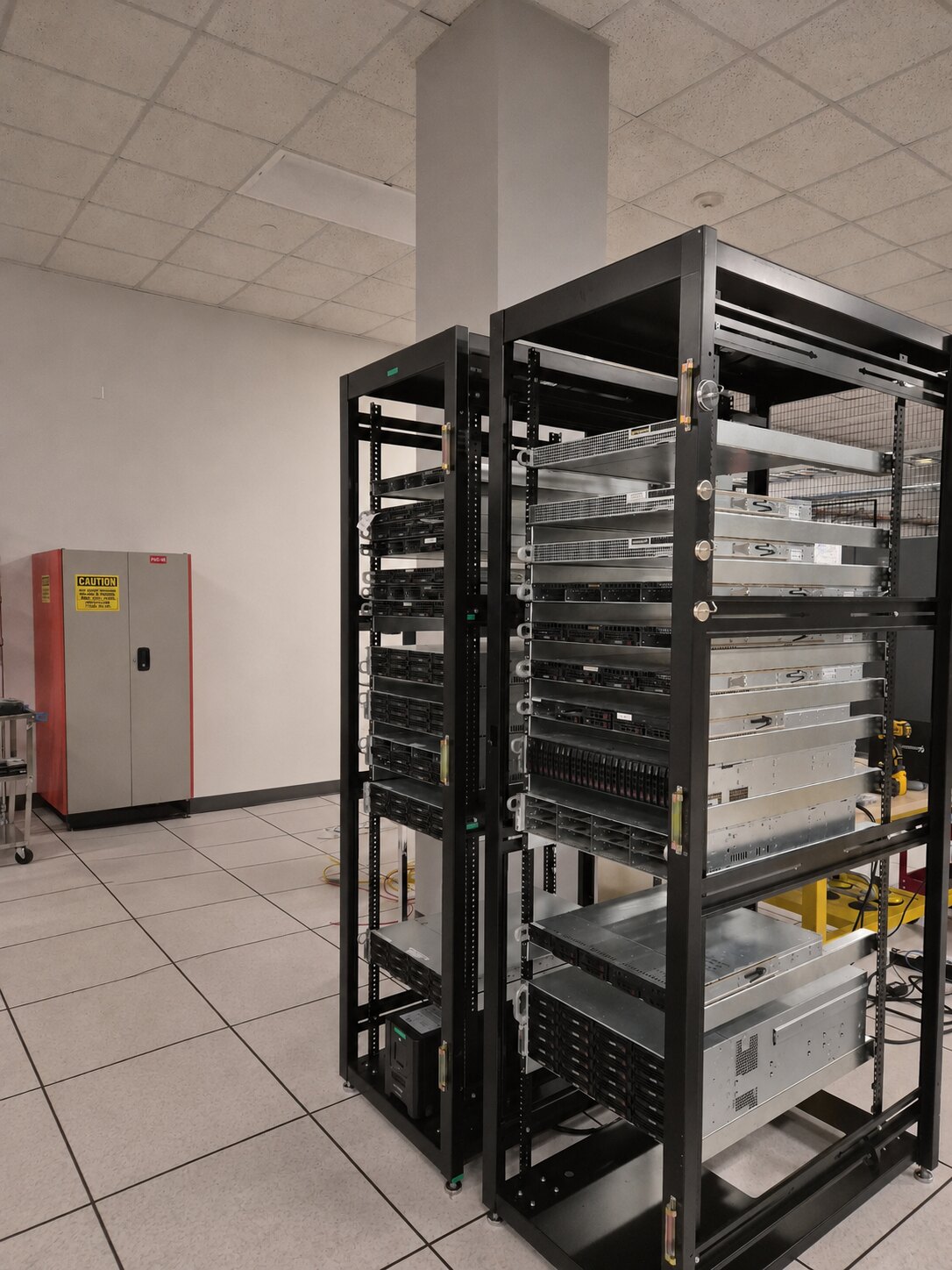
American Rails was not designed by someone looking at a rack from the outside. It was created by an engineer who spent decades working with the servers, operating systems and rail kits inside it.
From a TI-99/4A to 35,000 deployments
Tim Nettleton's relationship with computers started at age ten, learning BASIC on a TI-99/4A by typing programs from magazines. After studying computer science, he entered the industry as a programmer and moved into the rapidly growing world of internet infrastructure.
By the late 1990s he was working in Atlanta data centers through the transition from improvised "cable salad" environments to organized facilities filled with Dell, IBM and Supermicro equipment. Later, he built a large-scale provisioning system that could PXE boot, configure and prepare servers across many hardware architectures. More than 35,000 operating systems were deployed through systems he created.
The rail problem
Every server permutation seemed to bring its own bolt pattern, tiny fasteners and bearing-filled sliding rails. Kits were damaged, separated from their servers or orphaned during hardware refreshes. Identifying and reuniting the right server with the right rail consumed time that should have gone toward deployment.
When data centers purged old rail kits, Tim saved the strongest universal supports. Over more than a decade, those rails accumulated-several tons in boxes, waiting for what he jokingly called a rainy day.
The rainy day
Years later, Tim took an unexpected turn into farming, buying land and equipment and planting forty acres of bamboo. To help fund more equipment, he began selling the saved universal rails online. Buyers kept ordering. As the old inventory disappeared, the demand revealed something important: other people had the same problem.
Determined to keep serving that need, Tim used his AutoCAD experience, installed a CNC plasma table and began manufacturing rails from galvanized steel. Through multiple versions, laser cutting and CNC bending, the product evolved into today's 1U and 2U American Rails-straightforward supports made for practical rack depths and mixed hardware.
American Rails turns decades of data-center frustration into a simpler piece of infrastructure: install a dependable support system, then keep using the rack as the hardware changes.